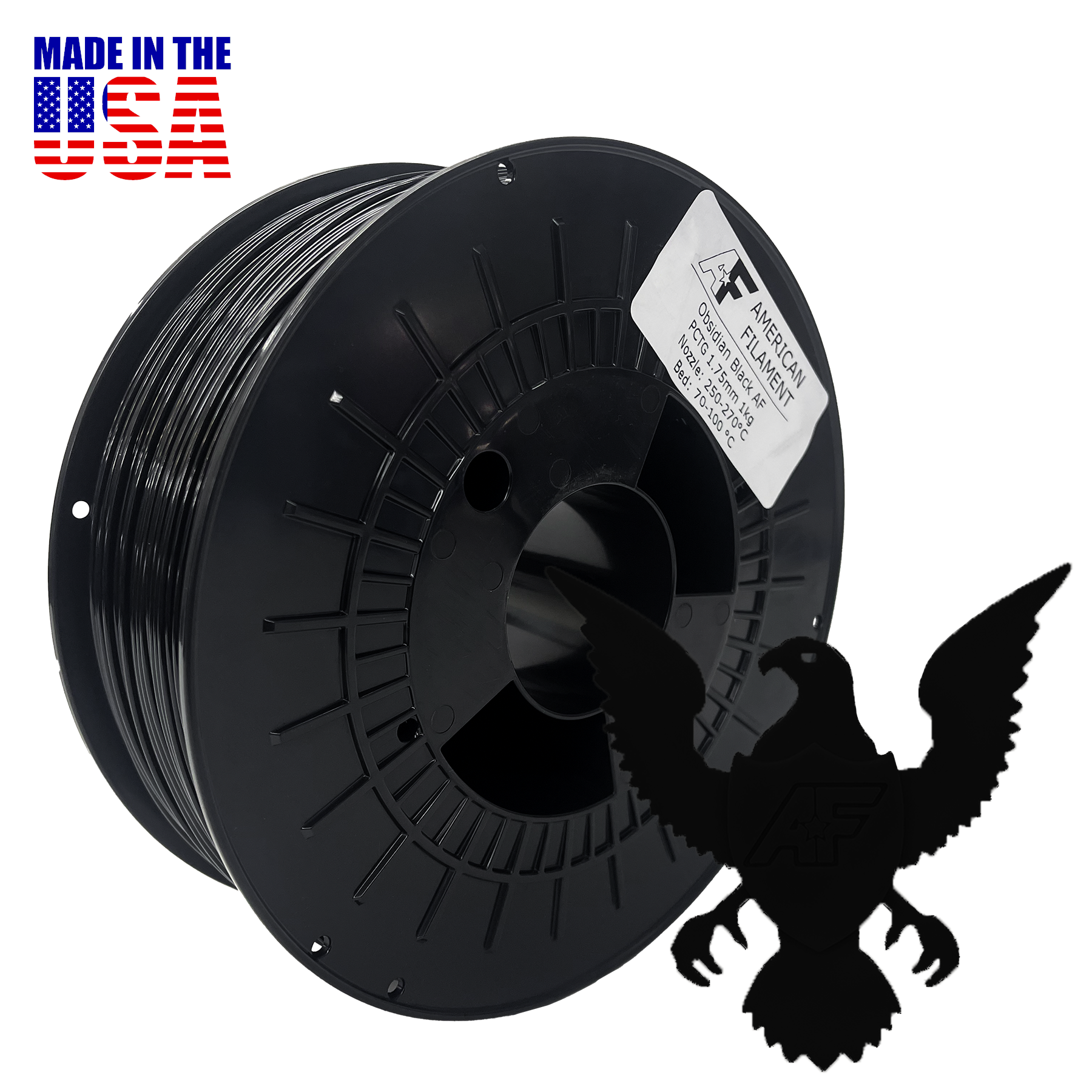


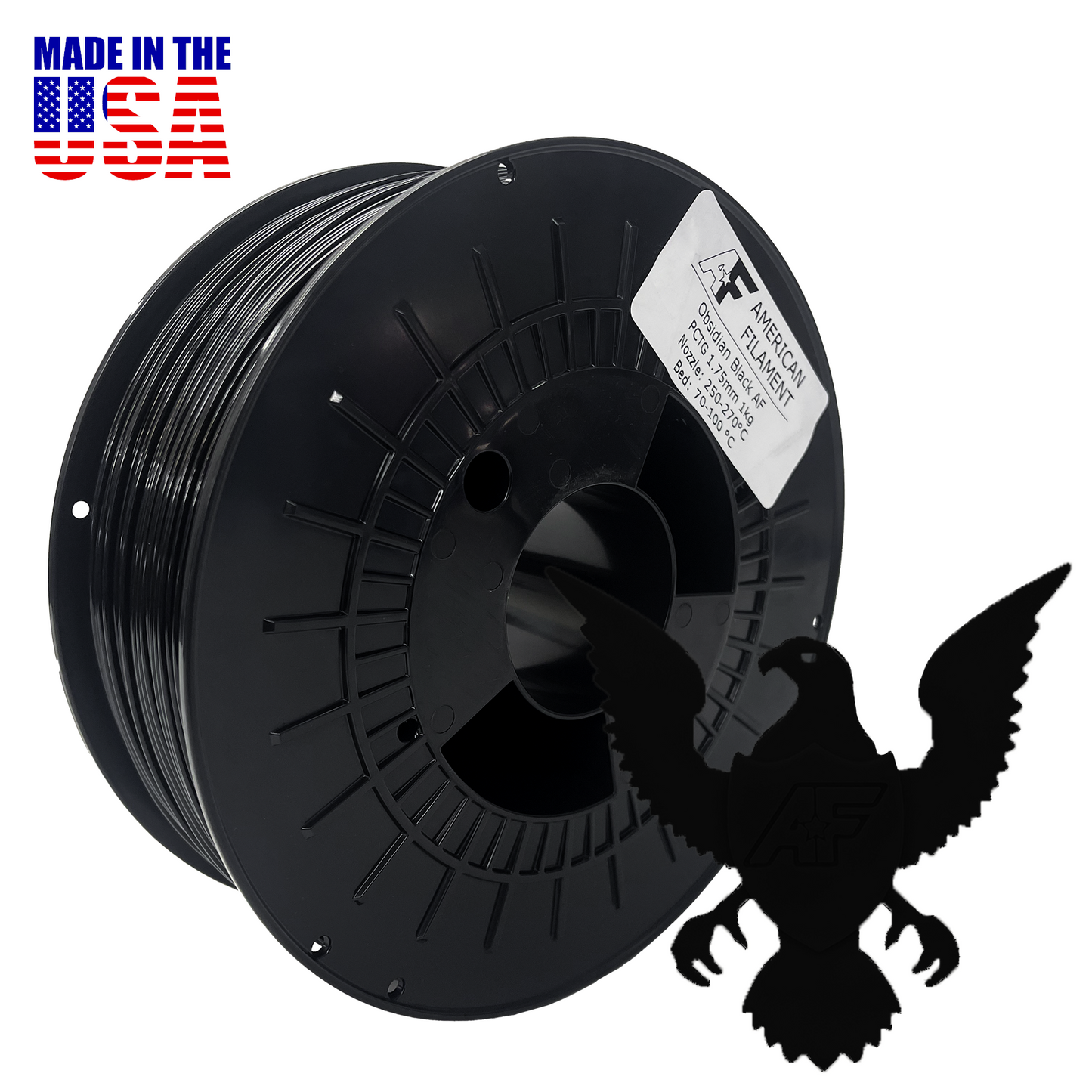
Filamento PLA+ Tough Pro AF negro ónix de 1,75 mm ¡Fabricado en EE. UU.!
Filamento PLA+ Tough Pro AF negro ónix de 1,75 mm ¡Fabricado en EE. UU.!
No se pudo cargar la disponibilidad de retiro
Presentamos nuestro nuevo PLA+ TOUGH Pro. Un PLA resistente de calidad de ingeniería que puede soportar fuertes impactos y altas temperaturas. Directamente desde la placa de construcción, nuestro PLA+ Tough Pro le brinda una resistencia al impacto 8,8 veces mayor que un PLA estándar.
Nuestro Tough Pro PLA+ utiliza resina virgen NatureWorks Ingeo 3D870, que fue diseñada para brindar propiedades térmicas y mecánicas similares al ABS en un paquete de PLA ecológico.
Este grado de PLA se puede recocer después de la impresión para cristalizar aún más el material, mejorando aún más sus propiedades térmicas y mecánicas.
Haga clic aquí para ver nuestra guía sobre cómo recocer sus piezas.
Nuestro Tough Pro PLA+ es un material verdaderamente resistente, diseñado para los trabajos más difíciles. Fabricado con resina PLA Ingeo 3D870 diseñada y fabricada aquí mismo en los EE. UU.; después del recocido, tiene una resistencia al impacto comparable al ABS y una resistencia a la temperatura comparable al PETG, todo en un paquete de PLA de base biológica con las mismas excelentes características de impresión 3D del PLA.
Cada carrete contiene 1 kg (2,2 libras) de filamento, con un diámetro de 1,75 mm y una precisión dimensional de +/- 0,05 mm.
Dimensiones del carrete (ahora compatible con las unidades AMS de Bambu Labs):
- Diámetro interior (ID) = 52 mm
- Diámetro exterior (OD) = 200 mm
- Ancho (An) = 67 mm
- Peso = 200 - 220 g
Recomendamos una temperatura de boquilla de 205-220 °C y una temperatura de lecho de 45-60 °C.
Anteriormente, Onyx Black se llamaba Matte Black. Si recibes un carrete con Matte Black en la etiqueta, ¡es el color correcto!
Descargas:
Print Settings
Print Settings
- Nozzle Temperature: 240 - 270°C
- Bed Temperature: 70 - 100°C
- Speed: 60 - 300 mm/s
Nozzle temperature can vary between 240-270°C depending on desired layer to layer adhesion vs part print quality. Higher nozzle temperatures will result in stronger parts, but may cause lower quality and/or increased stringing.
Part cooling can also vary depending on desired layer to layer adhesion vs part print quality. More cooling will result in better overhangs & bridging, but will decrease the ultimate layer to layer adhesion.
DO NOT DRY AT TEMPERATURES OVER 60°C.
1kg Spool Dimensions (AMS-Compatible)
1kg Spool Dimensions (AMS-Compatible)
- Filament Weight = 1 kg
- Filament Diameter = 1.75 mm (+/- 0.05 mm)
- Spool Inner Diameter (ID) = 52 mm
- Spool Outer Diameter (OD) = 200 mm
- Spool Width (W) = 67 mm
- Spool Weight = 220 g
Share




help! the print is amazing. the trouble i am having is that is the first layer is sticking to the build plate like it’s been welded to it. it is damaging the plate. having to use a metal scraper to remove it even using a rapid cooling technique does not help. any suggestions would make this problem go away would make this filament my go to.
Great product
PCTG has changed my outlook when PLA isn't an option, it's now my baseline filament.
First time using PCTG. Printed well after loading in American Filament file. No issues printing. My 3D printer is closed and has a heated bed. After trying it I ordered a 4kg spool.
Tried American filament at the recommendation of a friend, absolutely great recommendation. Really loving this PCTG, printing some very complicated prints for customers. Flawless, easy to setup and print. Great color selection. Printing on two PRUSA CORE ONE+ and two FLASHFORGE AD5M PROs.