
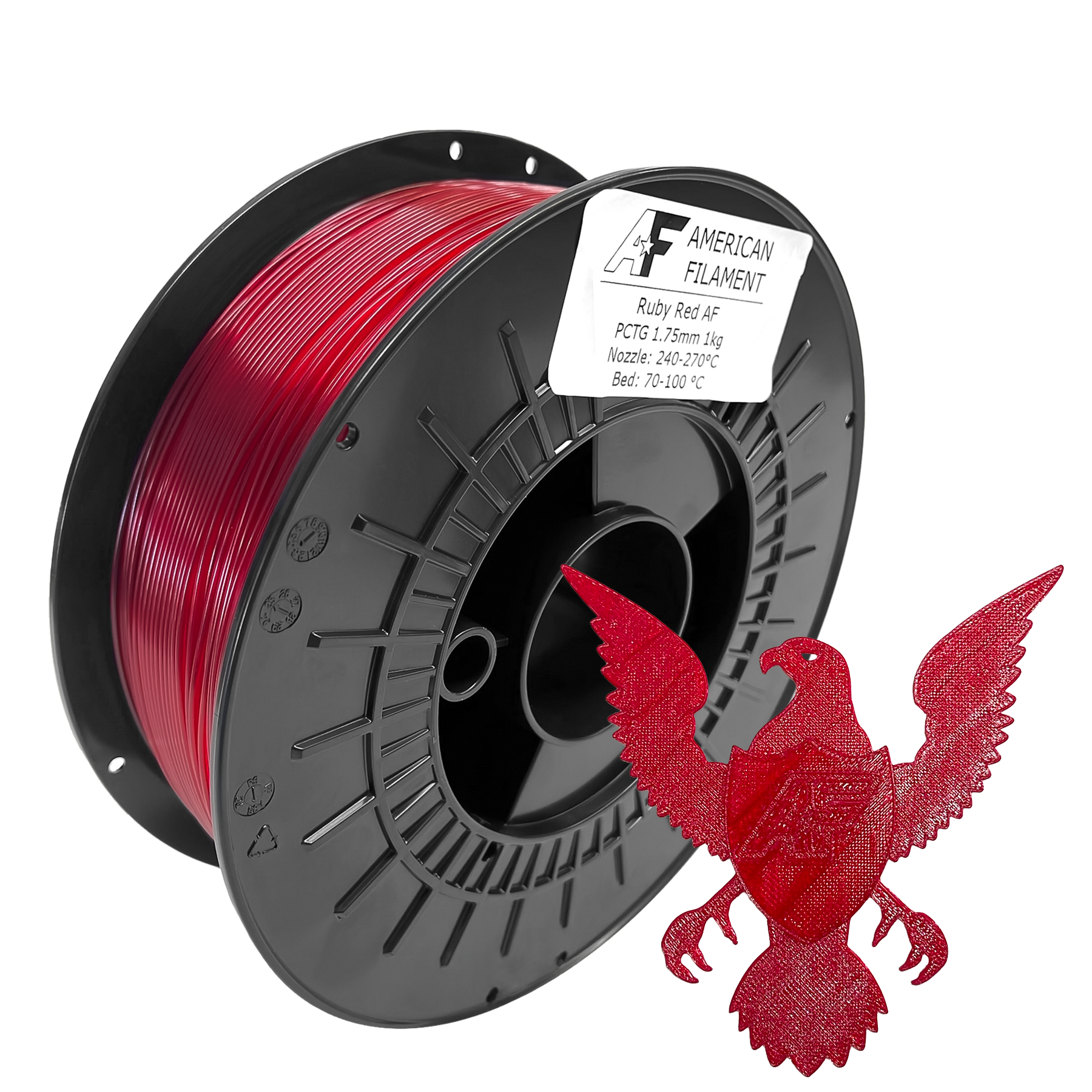


Filament PLA+ Tough Pro Onyx Black AF 1,75 mm fabriqué aux États-Unis !
Filament PLA+ Tough Pro Onyx Black AF 1,75 mm fabriqué aux États-Unis !
Impossible de charger la disponibilité du service de retrait
Présentation de notre tout nouveau TOUGH Pro PLA+. Un PLA robuste et technique qui peut résister à des impacts et des températures élevées. Directement à partir de la plaque de construction, notre Tough Pro PLA+ vous offre une résistance aux chocs 8,8 fois supérieure à celle d'un PLA standard.
Notre Tough Pro PLA+ utilise de la résine vierge NatureWorks Ingeo 3D870, conçue pour offrir des propriétés thermiques et mécaniques similaires à celles de l'ABS dans un emballage PLA respectueux de l'environnement.
Cette qualité de PLA peut être recuite après impression pour cristalliser davantage le matériau, améliorant encore ses propriétés thermiques et mécaniques.
Cliquez ici pour consulter notre guide sur la façon de recuire vos pièces.
Notre Tough Pro PLA+ est un matériau de travail de qualité, conçu pour vos tâches les plus difficiles. Fabriqué à partir de résine PLA Ingeo 3D870 conçue et fabriquée ici même aux États-Unis ; après recuit, il présente une résistance aux chocs comparable à celle de l'ABS, une résistance à la température comparable à celle du PETG, le tout dans un emballage PLA d'origine biologique avec les mêmes excellentes caractéristiques d'impression 3D que le PLA.
Chaque bobine contient 1 kg (2,2 lb) de filament, avec un diamètre de 1,75 mm et une précision dimensionnelle de +/- 0,05 mm.
Dimensions de la bobine (désormais compatible avec les unités Bambu Labs AMS) :
- Diamètre intérieur (ID) = 52 mm
- Diamètre extérieur (OD) = 200 mm
- Largeur (L) = 67 mm
- Poids = 200 - 220 g
Nous recommandons une température de buse de 205-220°C et une température de lit de 45-60°C.
Onyx Black s'appelait auparavant Matte Black, si vous recevez une bobine avec Matte Black sur l'étiquette, c'est la bonne couleur !
Téléchargements :
Print Settings
Print Settings
- Nozzle Temperature: 240 - 270°C
- Bed Temperature: 70 - 100°C
- Speed: 60 - 300 mm/s
Nozzle temperature can vary between 240-270°C depending on desired layer to layer adhesion vs part print quality. Higher nozzle temperatures will result in stronger parts, but may cause lower quality and/or increased stringing.
Part cooling can also vary depending on desired layer to layer adhesion vs part print quality. More cooling will result in better overhangs & bridging, but will decrease the ultimate layer to layer adhesion.
DO NOT DRY AT TEMPERATURES OVER 60°C.
1kg Spool Dimensions (AMS-Compatible)
1kg Spool Dimensions (AMS-Compatible)
- Filament Weight = 1 kg
- Filament Diameter = 1.75 mm (+/- 0.05 mm)
- Spool Inner Diameter (ID) = 52 mm
- Spool Outer Diameter (OD) = 200 mm
- Spool Width (W) = 67 mm
- Spool Weight = 220 g
Share



trying to send it all back. it’s useless after 20% of the roll is used. no help from product support. very frustrating as i bought from this was they are supposed to be made i. usa and a usa company.
Dennis,
We are very sorry that you had a disappointing experience with our product. However, our support team did their best to work with you on resolving your issues, and determined you were using incorrect slicer and printer settings. Our sales team is waiting on a reply from you in regards to the return process.
Printed with no issues - love the color and the finish.
Simply exceptional filament - thank you
Prints real nice easy to work with. Can't speak on durability to how long it lasts yet but so far impressed
Filament is great! Definitely buying more from you guys.