
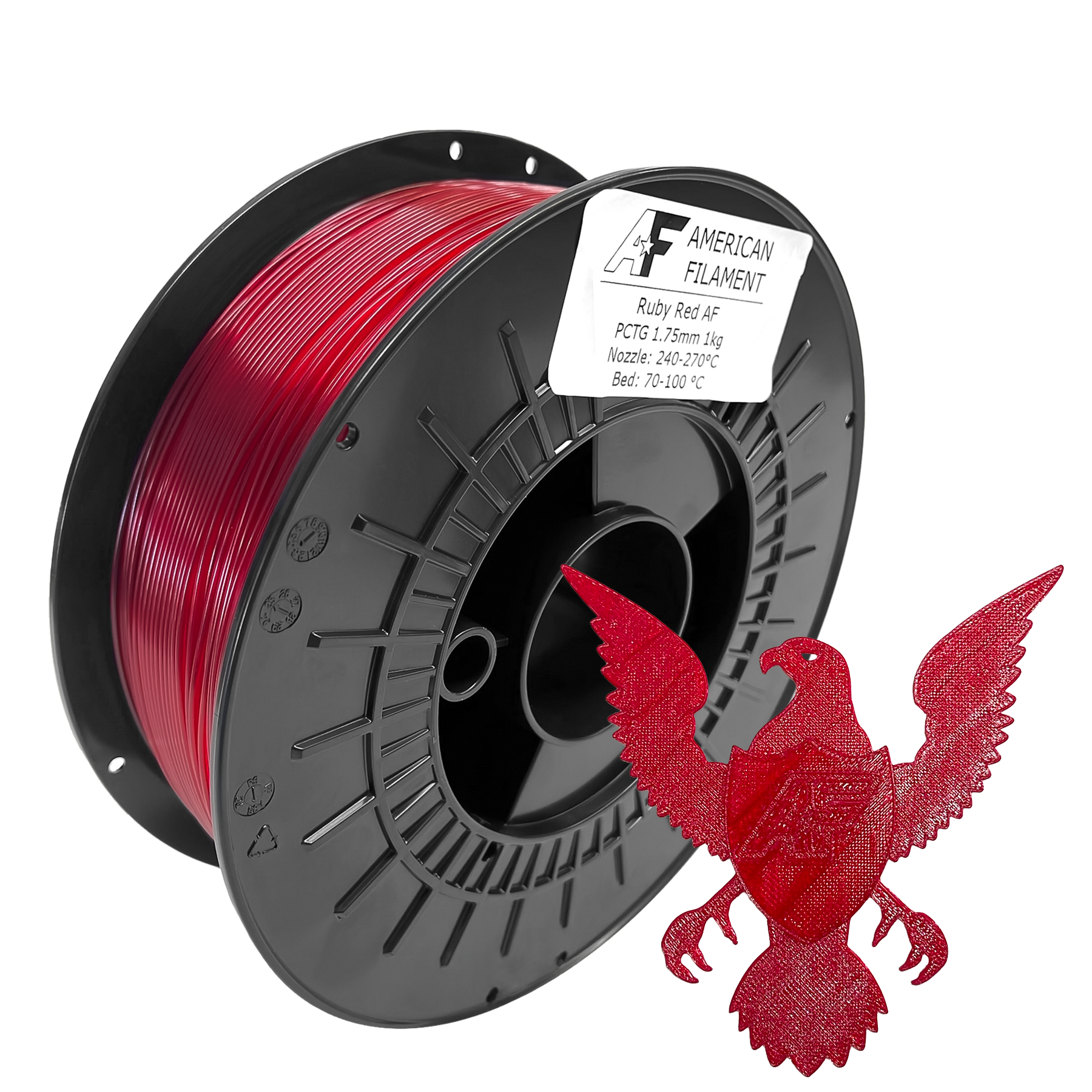


Filamento PLA+ Tough Pro AF negro ónix de 1,75 mm ¡Fabricado en EE. UU.!
Filamento PLA+ Tough Pro AF negro ónix de 1,75 mm ¡Fabricado en EE. UU.!
No se pudo cargar la disponibilidad de retiro
Presentamos nuestro nuevo PLA+ TOUGH Pro. Un PLA resistente de calidad de ingeniería que puede soportar fuertes impactos y altas temperaturas. Directamente desde la placa de construcción, nuestro PLA+ Tough Pro le brinda una resistencia al impacto 8,8 veces mayor que un PLA estándar.
Nuestro Tough Pro PLA+ utiliza resina virgen NatureWorks Ingeo 3D870, que fue diseñada para brindar propiedades térmicas y mecánicas similares al ABS en un paquete de PLA ecológico.
Este grado de PLA se puede recocer después de la impresión para cristalizar aún más el material, mejorando aún más sus propiedades térmicas y mecánicas.
Haga clic aquí para ver nuestra guía sobre cómo recocer sus piezas.
Nuestro Tough Pro PLA+ es un material verdaderamente resistente, diseñado para los trabajos más difíciles. Fabricado con resina PLA Ingeo 3D870 diseñada y fabricada aquí mismo en los EE. UU.; después del recocido, tiene una resistencia al impacto comparable al ABS y una resistencia a la temperatura comparable al PETG, todo en un paquete de PLA de base biológica con las mismas excelentes características de impresión 3D del PLA.
Cada carrete contiene 1 kg (2,2 libras) de filamento, con un diámetro de 1,75 mm y una precisión dimensional de +/- 0,05 mm.
Dimensiones del carrete (ahora compatible con las unidades AMS de Bambu Labs):
- Diámetro interior (ID) = 52 mm
- Diámetro exterior (OD) = 200 mm
- Ancho (An) = 67 mm
- Peso = 200 - 220 g
Recomendamos una temperatura de boquilla de 205-220 °C y una temperatura de lecho de 45-60 °C.
Anteriormente, Onyx Black se llamaba Matte Black. Si recibes un carrete con Matte Black en la etiqueta, ¡es el color correcto!
Descargas:
Print Settings
Print Settings
- Nozzle Temperature: 240 - 270°C
- Bed Temperature: 70 - 100°C
- Speed: 60 - 300 mm/s
Nozzle temperature can vary between 240-270°C depending on desired layer to layer adhesion vs part print quality. Higher nozzle temperatures will result in stronger parts, but may cause lower quality and/or increased stringing.
Part cooling can also vary depending on desired layer to layer adhesion vs part print quality. More cooling will result in better overhangs & bridging, but will decrease the ultimate layer to layer adhesion.
DO NOT DRY AT TEMPERATURES OVER 60°C.
1kg Spool Dimensions (AMS-Compatible)
1kg Spool Dimensions (AMS-Compatible)
- Filament Weight = 1 kg
- Filament Diameter = 1.75 mm (+/- 0.05 mm)
- Spool Inner Diameter (ID) = 52 mm
- Spool Outer Diameter (OD) = 200 mm
- Spool Width (W) = 67 mm
- Spool Weight = 220 g
Share



trying to send it all back. it’s useless after 20% of the roll is used. no help from product support. very frustrating as i bought from this was they are supposed to be made i. usa and a usa company.
Dennis,
We are very sorry that you had a disappointing experience with our product. However, our support team did their best to work with you on resolving your issues, and determined you were using incorrect slicer and printer settings. Our sales team is waiting on a reply from you in regards to the return process.
Printed with no issues - love the color and the finish.
Simply exceptional filament - thank you
Prints real nice easy to work with. Can't speak on durability to how long it lasts yet but so far impressed
Filament is great! Definitely buying more from you guys.